
From Low-Fat Dogma to Metabolic Reality: Why the 2026 Dietary Guidelines Matter
Jan 27, 2026
For nearly half a century, the U.S. Dietary Guidelines shaped the nation’s relationship with food.
They influenced school lunches, hospital menus, military rations, and professional nutrition training. They were meant to protect public health — yet during the same period, rates of obesity, diabetes, and metabolic disease climbed steadily.
The issue was not intention.
It was orientation.
Nutrition guidance became fixated on isolated nutrients — fat grams, cholesterol numbers, calorie counts — while overlooking food quality, processing, satiety, and metabolic response.
The low-fat era, reinforced by the grain-heavy food pyramid, encouraged refined carbohydrates and ultra-processed products that disrupted blood sugar regulation and appetite control. Even as calories from fat declined, chronic disease rose.
The January 2026 Dietary Guidelines mark a meaningful pivot.
For the first time, federal guidance explicitly emphasizes:
• Protein adequacy beyond deficiency prevention
• Whole, minimally processed foods
• Reduced reliance on ultra-processed products and added sugars
• Dietary patterns that support metabolic health and long-term resilience
This shift aligns with what clinicians see daily and what research has shown for years:
stable blood sugar, adequate protein, and real food matter more than nutrient fear.
Will guidelines alone fix the system? No.
Policy, pricing, and access still shape behavior.
But narratives guide priorities — and priorities guide systems.
The 2026 Guidelines do not represent perfection.
They represent progress.
And progress, when grounded in biology and lived experience, has the power to compound.
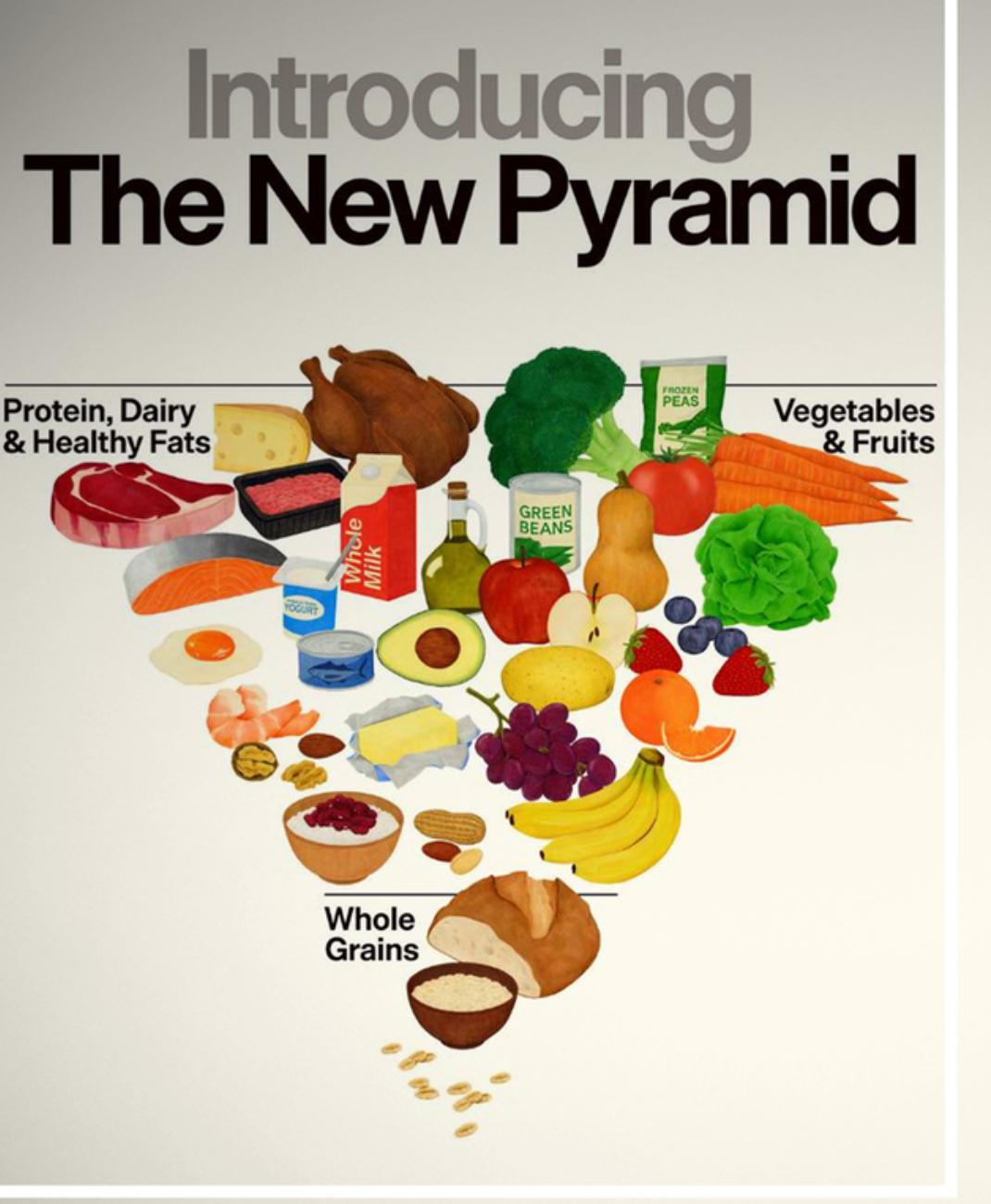
Old Pyramid:

Stay connected with news and updates!
Join our mailing list to receive the latest news and updates from our team.
Don't worry, your information will not be shared.